01 / 08
HUGO.CHARMIES(1)
PRODUCTION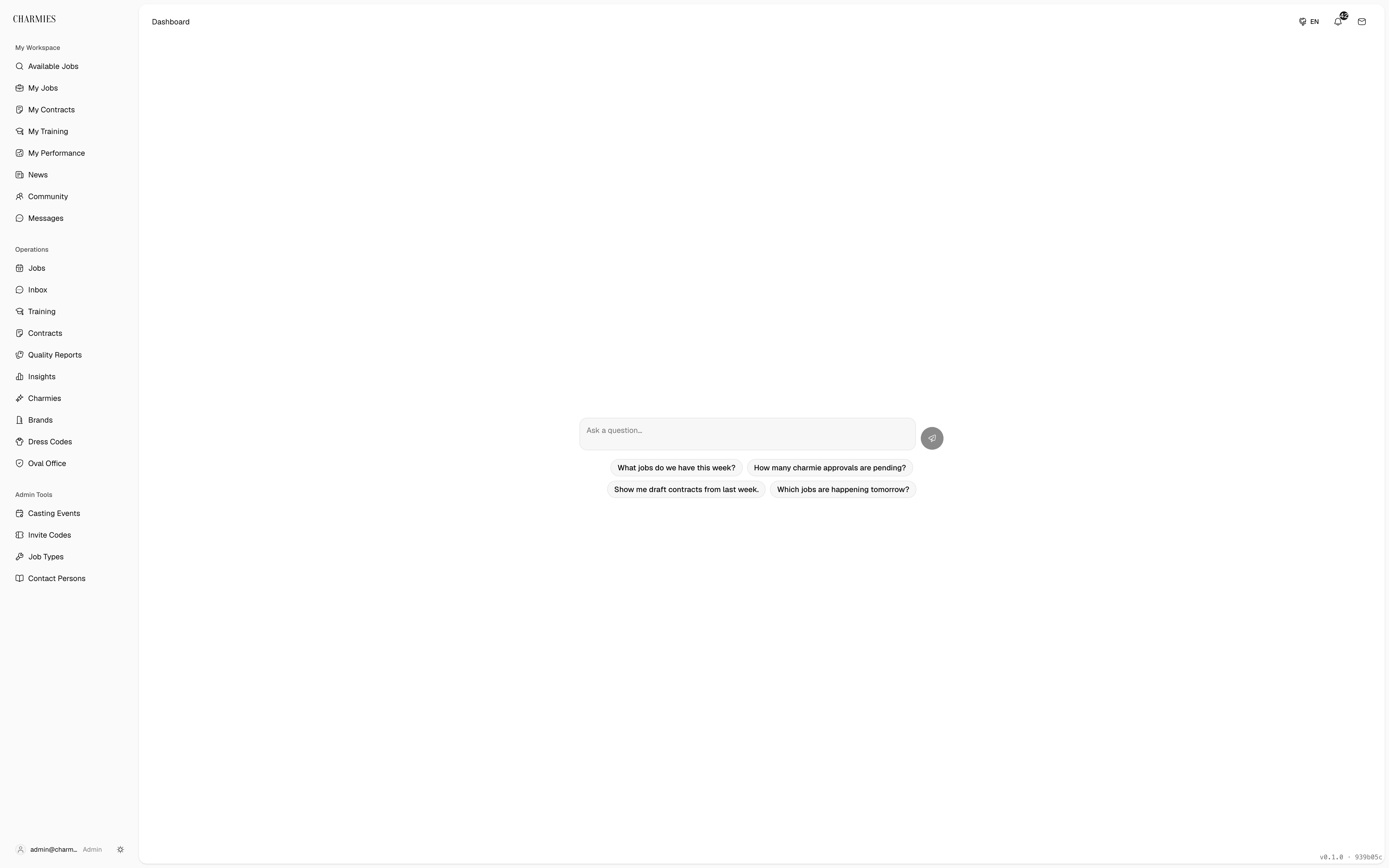
$ hugo --whoami
Shipping production AI at Charmies. Co-developing Kompass. Based in Belgium.
$ hugo --status
status         : ● Open to AI engineering roles
location       : Hybrid · Belgium
daily_driver   : Claude Code
favourite_stack: Next.js · Postgres
$
$ hugo --now
$ hugo --featured
$ hugo --next
kalai COMING SOON
iOS calorie tracker, camera-first, sub-10-second logging.
Swift 6 · SwiftUI · Vision · SwiftData
sports-event-hub COMING SOON
Started as an airsoft hub. Reframing to a hub for any local sports event.
Next.js · TBD
$ hugo --stack
AI / AGENTIC
────────────
PRODUCT ENGINEERING
────────────
INFRASTRUCTURE
────────────
$ hugo --takes
Most “agents” are one well-written LLM call plus retrieval. Add orchestration when a named failure forces it — long-horizon state, human-in-loop, fan-out you've already hit in production. Frameworks aren't wrong; they're premature.
The harness is the codebase now — SKILL.md, program.md, the context window, the agent graph. Sharpen this primitive and everything downstream multiplies. The catch: orchestration without evals is vibes with extra steps. Build the harness on top of eval discipline, not instead of it.
Models flip from correct to incorrect under casual pushback ~15% of the time. Manage AI like a mid-level report: trust it on execution, gate it on judgment. Continuous supervision is unsustainable; checkpointed approval before irreversible writes is the discipline that ships.
$ hugo --origin
At school we had a client in Leuven who wanted to automate scraping indicators like “what percentage of Belgians are obese.” Until then it was manual work. I'd seen something about n8n's AI agent feature, plugged OpenRouter into the workflow, and watched it scrape and reason about pages we'd have spent weeks on.
A few hours later I realised n8n was just making API calls — we could call OpenRouter directly from our own code. The whole flow migrated to native TypeScript. Around the same time we built the client's site with Bolt and I sat watching it generate a real custom website in minutes.
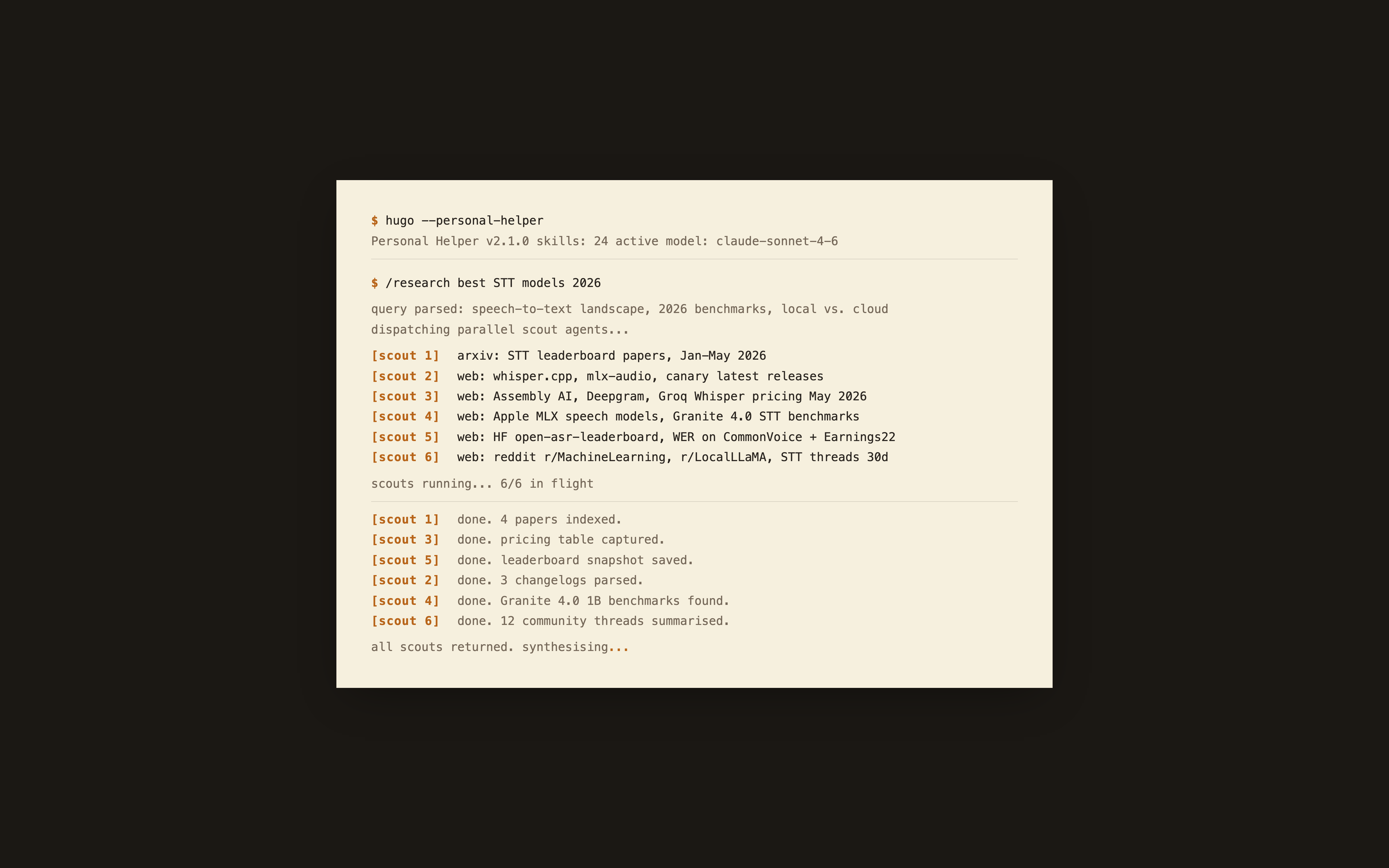
I haven't manually written code from scratch since. I'd rather spend the time learning to orchestrate agents. Coding ones, image ones, video ones, voice ones. Orchestration compounds across every sector.
EDUCATION
UC Leuven Limburg
BSc Applied Computer Science · 2022–2025
FIRST AI PROJECT
Ecofoodmap · n8n → code-native
CURRENT MODEL
Orchestrator, not writer
$ hugo --archive
$ hugo --contact
$ open ~/projects/charmies
HUGO.CHARMIES(1)
STACK
Next.js · Supabase · Vercel AI SDK · tool calls · RAG
01 / 04
The brief. Forty years of staffing run on Excel sheets, Facebook groups, and Word contracts over WhatsApp. Collapse it into one platform, and make the next layer AI-native, not a chatbot bolt-on.
02 / 04
What's actually live. A production agent that replaces manual creation flows: "schedule three charmies for tomorrow's brand activation" triggers the agent, the agent calls the tools, a confirmation card lands. Built on the Vercel AI SDK with structured tool calls + a RAG layer over the agency's own docs. About 200 ambassadors and the 5-person ops team use it daily. Contract issuance, the agency's slowest workflow, went from 10 to 15 minutes per contract to under one, end to end.
03 / 04
Trust, but verify the agent. A real B2B app is where AI-generated code fails quietly: IDOR, RLS, multi-tenancy bleed-through, GDPR edge cases. Most AI-built portfolios skip this layer because the model doesn't surface it. I wrote the e2e suite explicitly around those failure modes: server-side JWT role guards, IDOR coverage across 4 role surfaces, race conditions, GDPR paths, verified before each merge. This is the discipline AI codegen actually needs.
04 / 04
The arc that matters. I started this dashboard when my agentic discipline was weaker. Early shipped code was messy, fixes broke other things. The last six months were a stabilisation pass: surgical fixes on a large existing AI-built codebase, no rewrite, while the agency kept using it. Managing the downside of AI codegen is the 2026 skill. Most engineers can ship with Claude. Fewer can clean up after themselves.
SCREENSHOTS
$ Sole engineer end to end, architecture, deployment, the agent, the security envelope. Next: expanding the agentic surface to the client-facing booking flow.